
Nivalis Nights is most appealing if you want restaurant management, character stories, and everyday exploration inside a dense cyberpunk city. Its atmosphere is a strong reason to spend time there, but keeping a business supplied and staffed remains part of the experience. Expect a mixture of discovery and responsibility rather than an uninterrupted sightseeing holiday.
The main reservations concern the clarity of its interfaces, the pace of the day, and uneven performance in busy areas. Those issues can affect whether its attractive setting feels inviting or exhausting. This assessment focuses on that balance; it does not assign a numerical score or present a first-hand playthrough.
The player most likely to enjoy it
The strongest match is someone who finds a small operating business interesting before it becomes a large empire. You start with a noodle bar, learn its needs, and gradually add possibilities to your working life. Buying ingredients, deciding what to serve, and relying on employees give your exploration a practical context. A journey can lead to a person, an ingredient source, or another opportunity instead of serving only as a way to reach the next story scene.
That combination matters more than any one label attached to the game. If you enjoy adjusting a business and then stepping outside to meet the surrounding neighborhood, the two halves reinforce each other. If the business is an obligation you intend to ignore while photographing the city, the relationship can become much less comfortable. The opening places restaurant ownership close to the center of your routine.
It also suits players willing to learn interfaces through observation. Early goals, menu panels, information records, and daily feedback all require attention. The game offers guidance through Ava, but the experience does not consistently remove every question about controls or system interactions. Enjoying investigation is useful here, including investigation of the tools you use to manage ordinary tasks.
A restaurant gives the city a reason to matter
The management side is tangible because you occupy the same space as the people using it. A restaurant is a location you visit, furnish, and watch operating. Customers sit at tables, employees perform their jobs, and supplies must support the items you have chosen to offer. The business therefore connects the administrative decisions to an environment you can walk through.
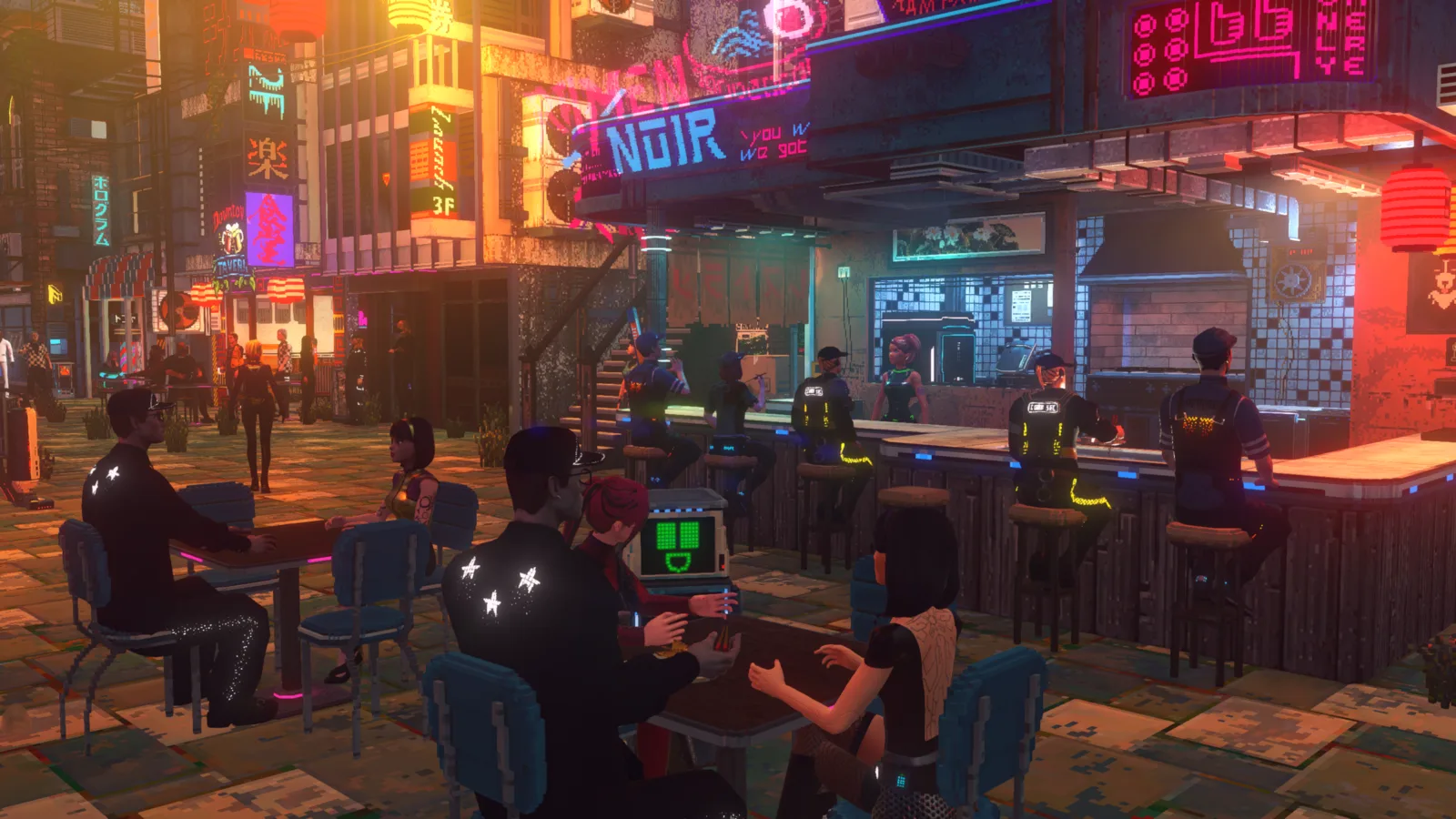
This is the game's distinctive attraction for someone who likes both management and exploration. You are not looking down at a disconnected balance sheet. You can return from a trip and see the venue that still needs your attention. The arrangement gives your routine a sense of place, even when the routine itself is repetitive.
The same connection creates friction. Shopping, equipment purchases, and staffing compete for resources and attention. Expanding the number of things you can do does not mean the existing responsibilities disappear. Fishing and growing ingredients can support the business, but they also introduce other activities to fit into your time.
The important expectation is participation. Restaurant management is more than scenery for the character stories. You do not need to approach every decision as a profit calculation to enjoy it, but you should be comfortable checking that the operation can continue while you spend time elsewhere. Players who dislike that repeated return to practical needs are likely to feel the tension sooner.
Exploration works at the scale of districts
The city is first person, with accessible districts and waterborne exploration. It is not a fully unrestricted open world in which every visible structure is a destination. Some parts of the skyline remain background. That distinction is useful before interpreting the enormous vertical environment as a promise that every floor can be entered.
Taxis, metro connections, and a boat give you different ways to move through the setting. Direct driving of the flying cars is not part of the experience. The attraction is being a resident moving between places, with local walks still separating arrival points from the people and businesses you want to reach.
The district structure makes the city understandable in larger pieces, but it does not solve all local navigation. Knowing the correct district is different from finding a specific doorway or character inside it. The map and compass can help establish your next destination while leaving you to learn the neighborhood at street level.
For an explorer, this can give familiar areas a satisfying sense of identity. For a player trying to complete several errands quickly, repeated local searching can become tiring. Whether learning the streets feels enjoyable will influence your experience as much as the variety of places available.
The setting is the clearest attraction
The combination of tall structures, illuminated signs, rain, and crowded pedestrian spaces makes ordinary movement visually distinctive. First-person perspective emphasizes the scale above you and the closeness of the streets around you. A change in weather or light can alter the same neighborhood without requiring a new activity to give it interest.
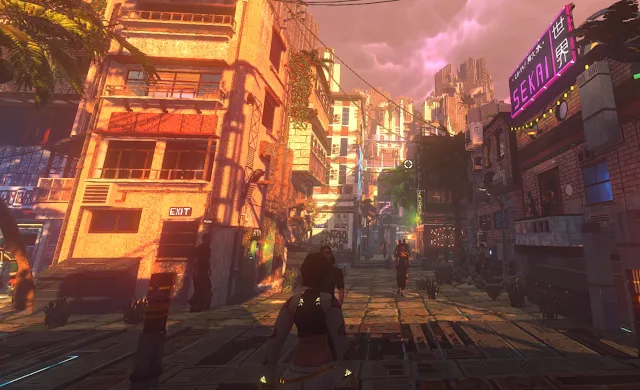
The visual style mixes stylized environments with smoother character models. It is not built around photorealism. If you like the city geometry but find the people visually inconsistent with it, that is a meaningful preference to consider rather than a small detail to dismiss. Dialogue brings those character models close to the camera.
English voice performances and music support the setting's identity. The presence of voiced conversations helps separate the people you can interact with from anonymous passing figures. The result can make a small exchange or short errand feel connected to the wider neighborhood, even when the surrounding activity is not something you can directly influence.
Darkness also has a practical consequence. Atmospheric lighting does not always make a person or object easy to read. The qualities that make a street attractive for a photograph can work against fast identification during a busy route. This is a setting to appreciate, but its visual appeal should not be mistaken for perfect readability.
Character stories provide a different kind of progress
The people you meet offer conversations, quests, and relationships alongside business development. Your decisions can shape your experience and your connections, while the main story retains a core narrative. That gives exploration a social purpose: you are learning who lives in the city as well as where its services are located.
The first-person design does not include a player-character customization system. Your presence is expressed through your choices and activities rather than an appearance editor. Players expecting to design an avatar and then watch that avatar move through a life simulator should account for that difference.
Relationships are also not a guarantee of constant free-form conversation. Available interactions depend on what the game currently offers. A character passing nearby may not have a new exchange ready merely because you know them. The social experience therefore works best when you enjoy returning to stories as they develop rather than expecting every encounter to supply another conversation.
The day creates pressure inside a cozy-looking world
Fishing, furnishing, and gentle city exploration can suggest a relaxed life simulator. Time management and the inherited business responsibility complicate that expectation. Your interests compete with practical tasks, and the city has nighttime restrictions. A pleasant walk does not automatically mean the rest of your routine is waiting without consequences.
This can be engaging if you like making small tradeoffs. You decide what matters today, arrange a manageable route, and accept that some opportunities will wait. It can be frustrating if you want to investigate every new lead as soon as it appears. The growing list of possibilities can feel less like freedom when you are already trying to keep the essentials covered.
The distinction is between an attractive setting and a low-pressure routine. Nivalis Nights can offer the first without consistently delivering the second. A player who enjoys planning a day may welcome the structure; a player seeking a purely calming retreat may experience the same structure as interruption.
Interface clarity is a real part of the evaluation
Several important tasks depend on finding the right panel and interpreting the information it presents. The game has useful tools, but discovering them can take longer than expected. A large objective display and numbered compass markers can make a busy moment feel crowded before you have learned which task deserves attention.
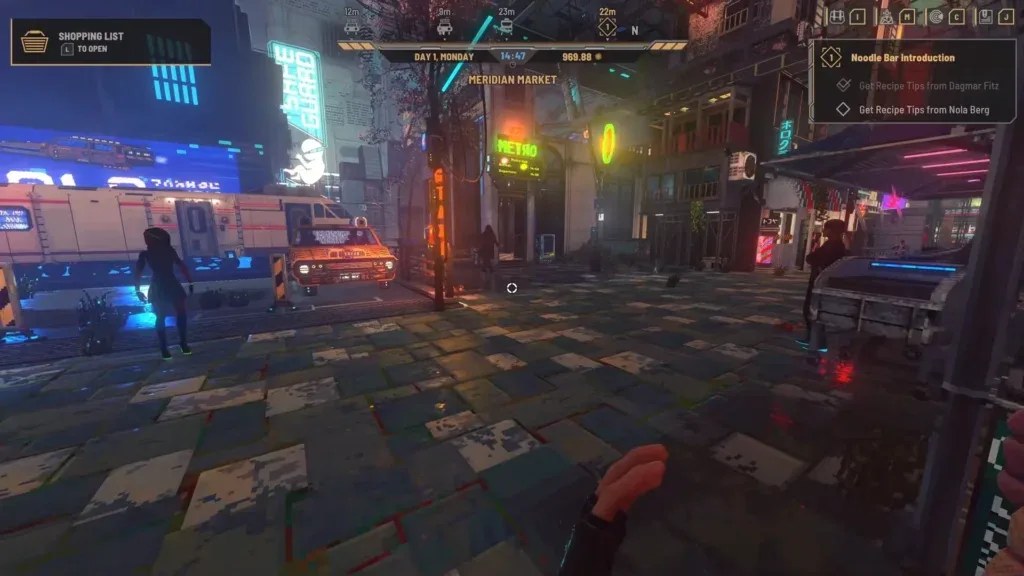
The district map is particularly important to understand as a travel tool. It is not a detailed street directory for every business and person. Reaching the correct area can still leave a final search on foot. That limitation matters more to someone running errands than to someone who enjoys wandering without a strict schedule.
These issues do not erase the depth of the activities, but they add work around the activities. Spending time looking for an interface action is different from spending time making an interesting business decision. Your tolerance for that distinction should be part of the decision to invest in the game.
Performance can change the practical recommendation
Busy locations have prompted reports of frame-rate drops, with experiences differing across hardware and settings. A smooth moment in a quieter area is not enough to establish that the main restaurant district will behave the same way. Because much of the opening routine takes place among pedestrians and businesses, performance there matters to the ordinary experience.
This review does not supply benchmark results or promise that a graphics setting will remove those problems. If consistent responsiveness is your first requirement, check the dedicated performance guidance for the areas and hardware relevant to you. City atmosphere and mechanical appeal do not compensate equally for uneven frame times for every player.
Performance should also remain separate from the game's overall appeal. You can find the setting and activities compelling while judging the experience on a particular device unsuitable. Conversely, a report of acceptable performance on one setup does not establish a universal result.
Weigh the routine before the scenery
Consider the activities you would want to repeat after the first excitement of discovering the city. If your answer includes operating a venue, checking its needs, and taking purposeful trips through the neighborhoods, the design has a strong fit. Character stories, fishing, and home decoration can broaden that routine without replacing it.
If your answer is mainly uninterrupted exploration, a fully customized player avatar, or direct flying-car control, the fit is weaker. Those expectations concern the shape of the experience, not a minor interface preference. An attractive skyline cannot supply a missing play style.
Choose Nivalis Nights for the combination of a lived-in cyberpunk setting and an active working routine. Give the interface friction, day pressure, and performance variability the same weight as the scenery when deciding whether that combination is appealing to you.