
If your Nivalis Nights customers are unhappy, first read the reason shown by the individual customer and check whether orders are still moving through the restaurant. A red waiting face, a customer leaving without satisfactory service, and a poor final review are different observations. Do not assume the expression alone proves that your rating is falling.
Start with food availability, cooking and serving coverage, the route from the counter to the table, and whether your seating exceeds what the current service can handle. Change one relevant part of that chain, then watch the result. There is no confirmed universal patience upgrade or single setting that prevents every unhappy face.
Separate three signals before changing the restaurant
The restaurant gives you more than one kind of feedback. Customer expressions describe a current state. An interaction can provide a more specific complaint. The review panel records the results you should check when assessing whether the problem is harming the business.
| Signal | Useful interpretation | What to inspect next |
|---|---|---|
| Unhappy customer waiting for an order | A part of service may be taking too long | Follow the order from preparation to delivery |
| Customers leave before satisfactory service | The delay has an observable consequence | Capacity, staff coverage and movement routes |
| Red faces but good completed reviews | The expression alone does not explain the final outcome | Whether customers receive food and remain until service finishes |
| Menu panel reports district dissatisfaction | The active menu may not fit regional preferences | The menu-specific feedback rather than only the waiting queue |
| Unhappy worker in the staff panel | This concerns an employee, not a customer's patience | The employee's schedule and wage settings |
These signals can appear together, but they are not interchangeable. Raising an employee's happiness does not demonstrate that an individual customer has already received an order. Changing a recipe does not show whether a waiter can reach the table. Choose the check that matches the feedback you actually see.
Read the complaint and follow one order
Approach an unhappy customer and read the available status or interaction. A waiting-for-order message points you toward the service sequence. Begin with that concrete task instead of immediately buying decorations or adding another recipe.
Watch what happens to one customer. Is food being prepared? Does a worker deliver it? Does the customer remain while waiting? These observations tell you where to look next. A restaurant can have ingredients and employees listed in its panels while still failing to move a particular order efficiently.
If a prepared meal is waiting, investigate serving rather than assuming the kitchen needs another cook. If preparation is not moving, first check that the active dish can be made. If staff repeatedly travel around an obstruction, consider the layout before concluding that their skill is too low.
Do not attach a fixed patience timer to the expression. The available feedback does not establish a reliable universal number of seconds before every customer becomes unhappy. The practical goal is to identify the delay you can observe and reduce it, not to aim for an invented threshold.
Confirm that the kitchen can serve the active menu
Look at the menu and venue inventory for the items currently offered. Supplies in your personal inventory are not the same as supplies available to the restaurant. A purchase can be complete while the storage step is still unfinished.
If the kitchen lacks an ingredient or required equipment for the active dish, address that shortage before adjusting the floor. A faster serving route cannot deliver a meal that has not been prepared. Similarly, a newly hired worker does not resolve food availability by existing in the staff list.
Use the current Shopping List to identify what remains missing. Its shortages can change as customers consume stock. Checking an old remembered quantity is less useful than checking the restaurant's present requirement.
This is a service diagnosis, not a request to redesign the entire menu. Once the current dish can be made, observe whether the original waiting problem improves. Use the restocking guide for the full shopping and venue-storage procedure. Avoid changing recipes, equipment, and seating together before you have established whether missing supplies were the original obstacle.
Check the people actually covering the service period
Inspect who is working during the time the problem occurs. A waiter assigned for part of the day may not be present for every service period. A venue can look adequately staffed on paper while customers wait during an uncovered interval.
The same check applies to roles. Someone hired into the restaurant still needs the appropriate assignment. If one worker is handling cooking and serving, those tasks can compete for that person's attention. The useful question is what the employee is doing while the customer waits.
A focused adjustment is to ensure that preparation and delivery are both covered at the affected time. Then watch another order travel through the restaurant. This is more informative than hiring several people and changing every schedule at once.
Keep employee happiness in its own panel. Wages and working hours affect employees, but the customer's immediate complaint still needs to be traced through service. High happiness and good skills are useful staff information; they are not proof that every table can be served quickly under the current workload.
Use the staff hiring guide for recruitment and schedule controls. Here, the check is whether the roles and coverage you already configured match the actual period in which orders stop moving.
Match seating capacity to the service you can observe
Adding tables creates room for more customers, which also increases the amount of food and delivery work the restaurant must handle. If the operation struggles after you expand seating, consider capacity as part of the diagnosis.
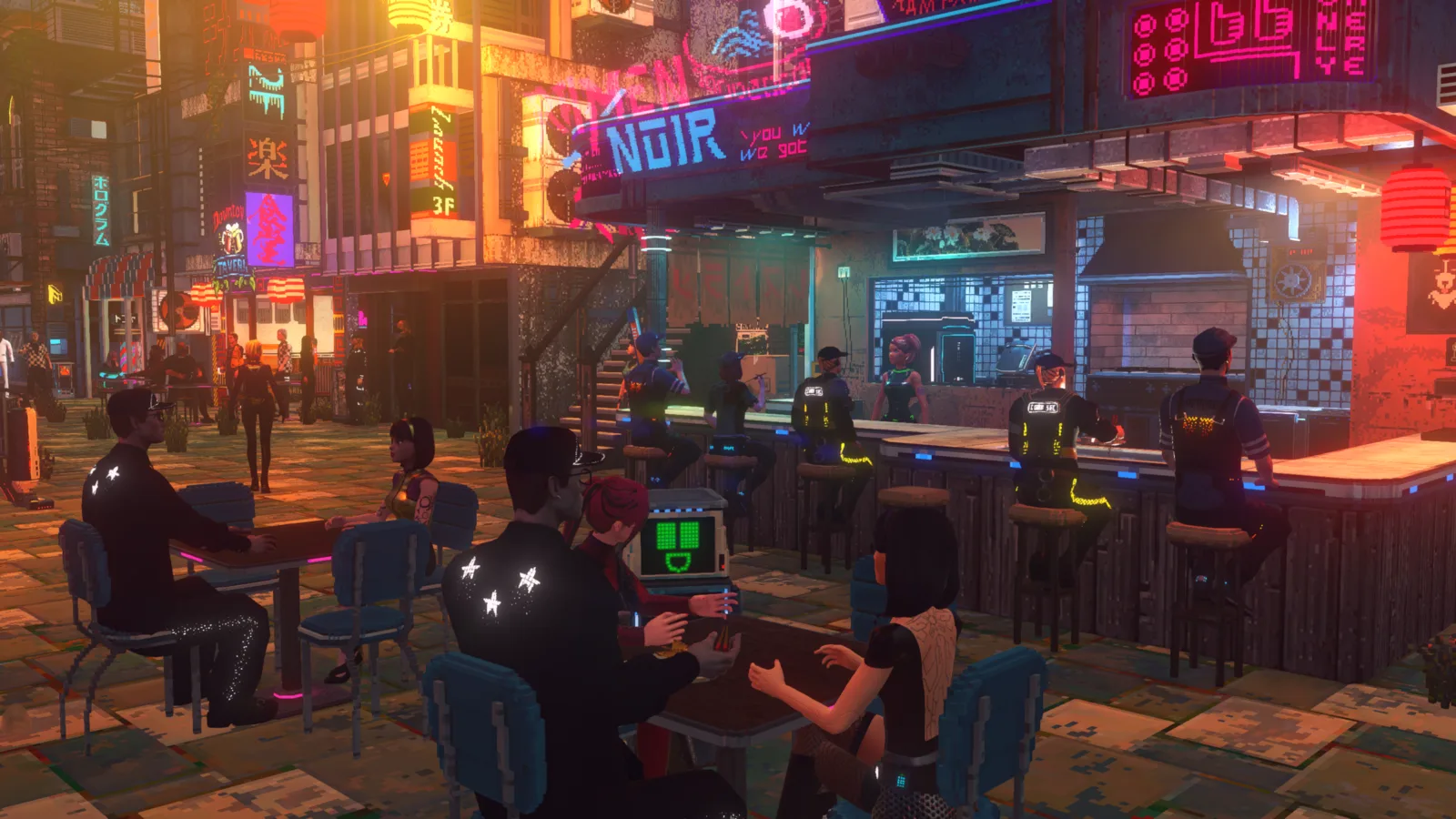
Watch whether the queue grows faster than completed service. If more tables are occupied but meals arrive slowly, your current setup may be asking the same workers to cover more demand than before. Further seating expansion can make that pattern harder to understand.
A useful test is to reduce the pressure on the service rather than trying to fill every available space. Remove excess tables from the active layout or otherwise return to a smaller arrangement you can observe. Compare whether orders now move more consistently and fewer customers leave while waiting.
Do not interpret this as a fixed table-to-waiter formula. There is no verified universal staffing ratio here. Distance, assignments, coverage, and the current menu can all affect what you see. The purpose of the smaller test is to determine whether workload is contributing to your problem.
Once the smaller service works, add capacity deliberately and check the result again. A functioning modest restaurant is a better reference than a large layout in which several things changed before you noticed the first delay.
Shorten the route between preparation and customers
Look at the physical space your workers cross. A table that is far from the counter needs a longer delivery journey than one closer to the service area. Furniture and appliances can also create awkward routes if they interrupt movement.
Walk through the layout and observe the employees using it. Look for repeated detours, crowded approaches, or a worker apparently unable to reach the next task. If you see a likely obstruction, move the relevant piece and watch whether the route becomes simpler.
Do not redesign the entire restaurant just because one customer has a red face. Make a change linked to what you observed: clear the route that is blocked, reduce the distance of the tables that cause long trips, or remove the object that repeatedly interrupts movement.
The result to look for is completed service, not a prettier arrangement. A visual improvement does not establish a service improvement unless food delivery or table use also becomes more consistent. Conversely, a compact layout can be practical even if it is less ambitious than the arrangement you originally wanted.
Treat menu tablets as a specific service option
Table menu tablets are a reported option for letting customers order at their tables. They concern the ordering stage; they do not replace the need for food preparation and delivery throughout the restaurant.
Before relying on one, inspect the table and the placement available to it. Players have reported a conflict between the tablet and a canopy because they use the same table attachment position, and that the device is intended for tables rather than bar seating. Treat those as placement conditions to check in your own setup, not a guarantee that every table accepts every combination.
After installing a tablet, observe the same service chain again. A customer may submit an order more conveniently while a different delay remains in the kitchen or delivery route. If the red face persists, that does not by itself prove the tablet is ineffective; identify which stage is still slow.
Do not buy tablets as a universal cure for patience. They have a more specific purpose, and replacing one attachment with another can introduce a separate tradeoff. Test the relevant function before equipping every table.
Distinguish regional menu feedback from waiting
The venue's menu panel can show whether people in the district are satisfied with the selection. That regional feedback belongs to the menu, whereas a waiting-for-order complaint belongs to an immediate service experience.
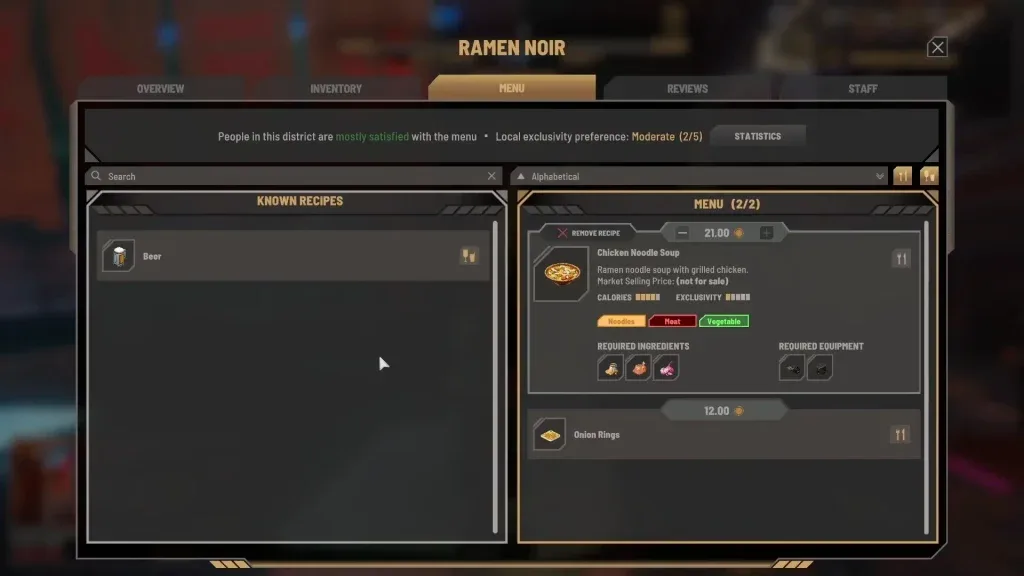
Read the two separately. If the district message is negative, inspect the menu's stated preference information. If customers are explicitly waiting for orders, observe preparation and delivery. Both problems may deserve attention, but changing one does not demonstrate that the other has been solved.
This distinction also prevents unnecessary spending. A new recipe or appliance can expand the selection without clearing a blocked route. More staff can improve throughput without changing how the district responds to the food offered. Diagnose the feedback first; the best menu guide covers preference-based menu changes.
The menu message should not be converted into a claim about every individual customer. People can express different complaints, and the interface can describe the neighborhood at a broader level than the person standing in front of you.
Use customer interactions for immediate recovery
Some unhappy customers offer interactions such as friendly small talk or a free meal. If those choices appear, they give you an immediate way to respond while you investigate the broader service problem.
Read the result of the interaction. Small talk has been shown resolving a complaint in an individual encounter, but it should not be treated as a guaranteed reset for all customers. A free meal is also a specific option, not proof that every bad experience disappears without another consequence.
These actions are most useful alongside the operational check. If every new customer becomes unhappy because meals are not reaching the tables, repeatedly talking to them addresses the symptom while the same delay continues.
Choose an offered interaction that makes sense for the customer in front of you, then return to watching service. The outcome you want is both a recovered encounter and a restaurant capable of handling the next one with less intervention.
Evaluate completed service rather than the face alone
A red expression can be concerning without translating directly into a poor final rating. Players have reported strong reviews despite customers becoming grumpy while waiting. That does not prove waiting never matters; it means the expression is an incomplete measure of the result.
Check whether customers get served, whether they leave prematurely, and what the review panel records. These are more useful together than any one of them in isolation. If reviews remain strong but customers are leaving without food, the operation still deserves attention. If meals are delivered and reviews are good, buying unverified patience items may not be the right priority.
Use the same observations after a change. A shorter route or a better-covered service period should be judged by whether orders move and customers complete their visit. Avoid promising yourself a permanently cheerful dining room as the only acceptable outcome.
Record a persistent fault after ruling out basic causes
If an order repeatedly stops under the same conditions despite food availability, working coverage, and a clear route, document the specific behavior. Note the venue, customer message, time of day, staff activity, and the step where the order stops. A short recording or screenshot can make the pattern easier to identify.
Make a manual save before quitting or attempting a restart. A repeatable problem with a clear description is more useful than a general report that everyone looks angry. It also lets you separate a possible pathing or interaction fault from a normal moment of waiting.
Do not assume a decorative item, maximum comfort, or one higher skill number guarantees a fix. The reliable starting point is the service you can observe: food becomes available, preparation proceeds, a worker reaches the customer, and the visit reaches a result you can check.