
The Nivalis Nights friendship meter is the green face indicator shown with a character’s relationship information. It changes when your words or actions improve that character’s opinion of you. During conversations, watch for a small positive reaction after choosing an answer; outside dialogue, complete that character’s quests and accept opportunities that fit their interests.
Friendship is separate from romance. Green face progress represents friendship, while red hearts represent romantic progress. A friendly response can improve your relationship without being a flirt, and not every conversation offers a romantic option. The game does not provide a verified universal point chart or a complete public list of exact thresholds, so the reliable approach is to read each character, choose consistently, and track the visible reactions and relationship summary.
How to read the friendship meter
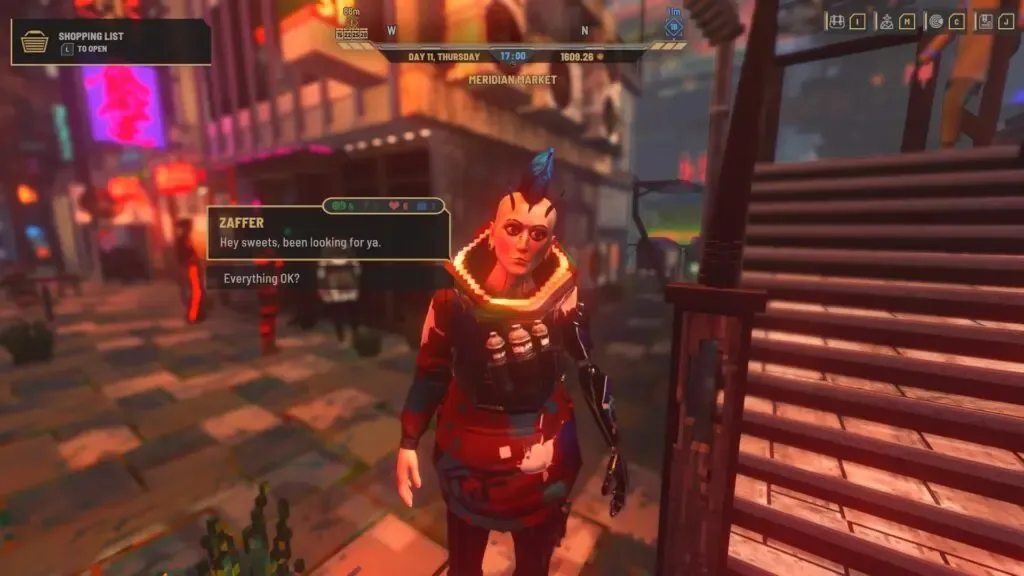
Early in the game, Ava introduces the Relationship Matrix. It is a visual display of how a human or android responds emotionally to what you say and do. Ava explains that it interprets changes in attitude through body language and tone, giving you immediate guidance during social interactions.
The two signals relevant to friendship and romance serve different purposes:
| Indicator | Meaning | Common way to gain progress |
|---|---|---|
| Green face | Friendship with that character | Choose answers they appreciate, help them, and complete relevant quests |
| Red hearts | Romantic interest | Flirt when the option appears or agree to romantic meetings and dates |
Do not treat the green and red indicators as interchangeable. You can build a strong friendship without choosing romantic answers, while romanceable characters may require both an established relationship and explicitly romantic choices. The game’s choices can shape relationships in romantic or non-romantic directions.
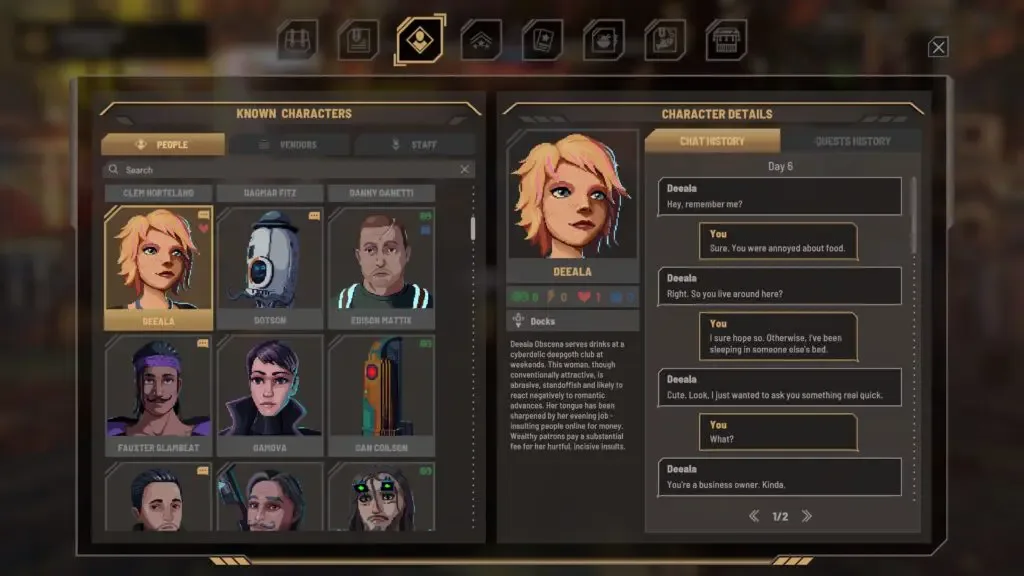
The meter is associated with individual characters rather than one shared social level. A positive interaction with one resident does not establish how another resident will react. Each conversation should therefore be read in the context of that person’s values, personality, current request, and prior interactions.
A developer statement describes friendship and romance meters for the characters you meet. That does not mean every encountered character can be dated. The meters provide relationship information broadly, while romantic eligibility is more limited.
How to increase friendship reliably
There is no supported one-line trick that raises every character’s friendship. The practical method is to combine attentive dialogue with the character’s quests and other personal interactions.
- Meet the character and listen before committing to a position. Their introduction, complaints, loyalties, and goals often indicate which answers they are likely to respect.
- Choose the response that fits that individual. The most agreeable-sounding answer is not automatically the best answer for everyone. Consider what the character has already told you.
- Watch the Relationship Matrix after the choice. A positive indicator confirms that the response improved their attitude. If no positive change appears, do not invent progress that the interface did not show.
- Complete quests connected to the character. Relationship development is not restricted to casual conversation. Quest decisions and the way you help someone can affect how that relationship develops.
- Remain consistent in later conversations. Characters can represent very different sides of Nivalis. Repeatedly choosing a position that matches one character’s outlook is more dependable than alternating between incompatible answers merely because each sounds polite.
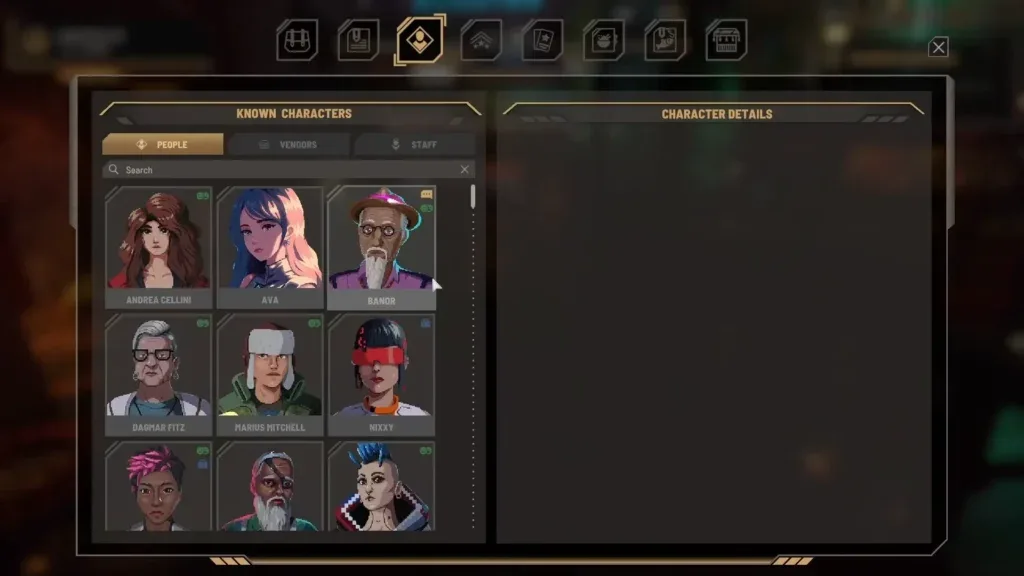
- Review the character information and daily relationship summary. The Known Characters area records people you have met, while the end-of-day progress display can summarize relationship changes. Use these screens to verify progress instead of relying on memory alone.
This process matters because dialogue options are contextual. Some conversations offer two or three answers, and the useful clue is usually the character’s established outlook. Pay attention to whether they favor corporate authority, resistance, personal loyalty, profit, honesty, or another clearly expressed priority. The game asks you to understand the speaker rather than select one universally correct personality.
Dialogue choices and character preferences
A friendship-building answer is the answer that suits the character, not necessarily the answer you would choose for your own role-playing style. This distinction becomes especially clear when comparing characters on opposite sides of the city’s conflicts.
Zaffer is presented as a rebel and street artist opposed to CorpSec. Responses aligned with resistance fit that outlook. When Zaffer offers to create neon for the Noodle Shop, accepting the offer is a relationship-relevant decision and can lead toward a date opportunity. The important lesson is not that every NPC likes rebellion; it is that Zaffer’s dialogue establishes what Zaffer values.
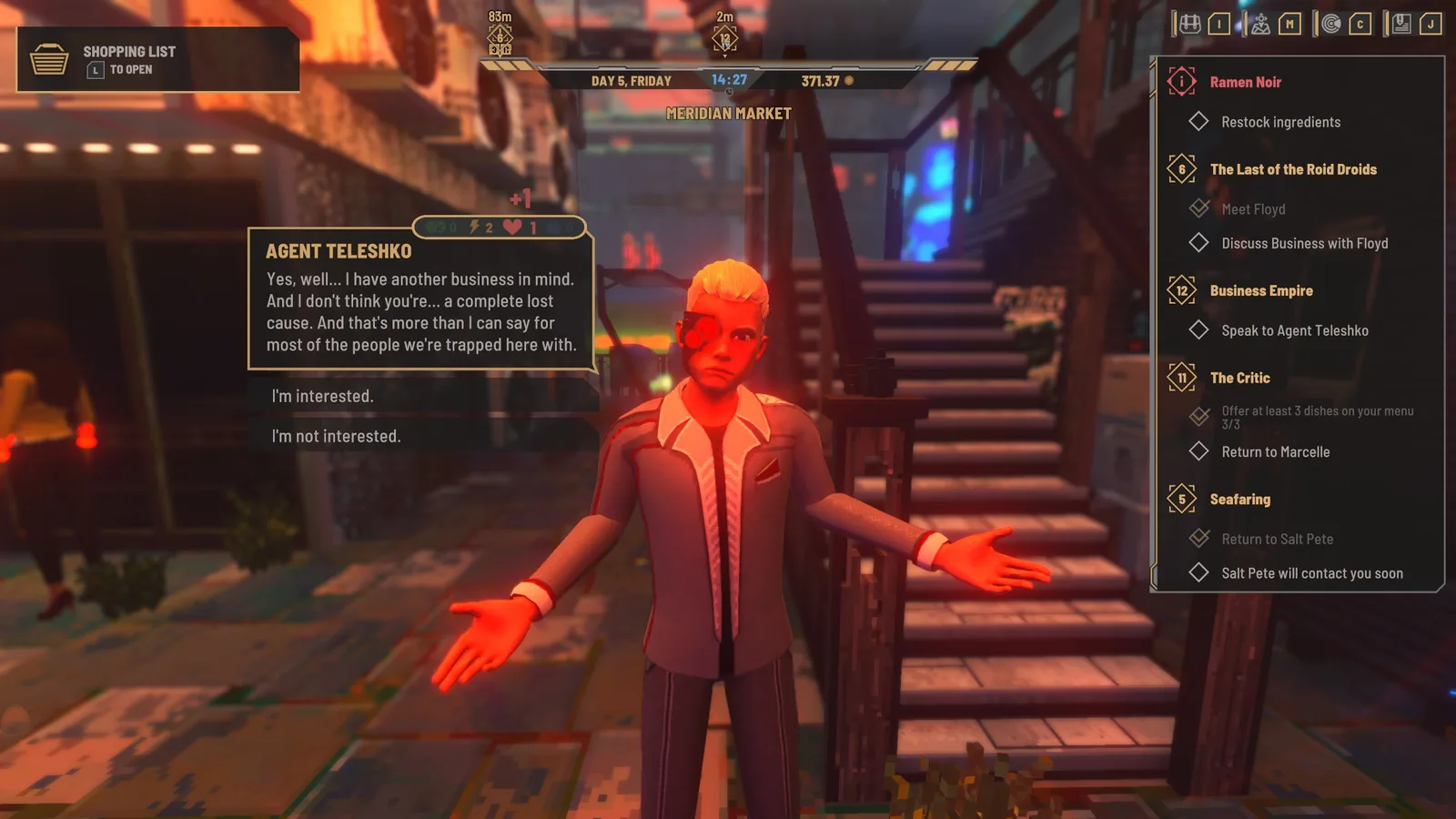
Agent Teleshko represents a very different case. He responds to answers that suit his corporate perspective. During the Business Empire quest, a documented sequence that improves affinity with him includes being direct about speaking to Brooke, eventually revealing that Brooke sold the business license to his brother, and describing the plan as an attempt to trick Teleshko. That path also unlocks the Cheeseburger Recipe.
This Teleshko example demonstrates three useful rules:
- A character’s preferred response may conflict with another character’s interests.
- Friendship progress can be tied to a quest conversation rather than repeatable small talk.
- A relationship choice can have an additional gameplay outcome, such as a recipe reward.
It does not establish that every Teleshko conversation has only one successful route, nor does it provide a universal affinity formula. Use it as a clear example of personality-based dialogue, not as a template to apply to the entire cast.
When a choice feels ambiguous, pause before selecting it and compare the wording with what the character has already said. A blunt character may appreciate directness; an anti-corporate character may reject a CorpSec-friendly response. If the conversation introduces a personal project, business proposal, or request for help, treat it as potentially relationship-relevant even when the interface does not label it as a gift or friendship task.
Where to check relationship progress
The Known Characters list is the main place to review people you have already encountered. Character profiles can display relationship bars and conversation information, making the list more useful than trying to remember every small reaction across the city.
Use a simple review routine:
- Open the Known Characters area after meeting someone important.
- Confirm that you are looking at the intended character’s profile.
- Compare the friendship and romance indicators rather than assuming one represents both.
- Review available character information before the next conversation.
- Check again after a clearly positive interaction or at the end of the day.
The end-of-day progress information can also show relationship increases. This is especially helpful after a busy day containing several quests and conversations. It provides a second opportunity to notice whose relationship changed, even if a brief on-screen reaction was missed during dialogue.
The available information does not establish exact numerical point values, a fixed number of conversations per friendship level, or a complete threshold table for every NPC. Visual progress and confirmed positive reactions are therefore more useful than attempting to calculate an unsupported score.
Friendship versus romance
Friendship is part of the broader relationship system, but it should not be treated as a guaranteed dating countdown. Red hearts are the romantic signal, and they can increase when you flirt or agree to dating and meeting opportunities. A character may first build a friendship with you, flirt later, or perform a final check-in before offering a date.
Not every conversation includes a flirt option. Continue building friendship when a romantic response is absent instead of assuming the relationship has stalled. Conversation opportunities, quests, and later meetings can provide additional decisions.
Likewise, not every NPC is romanceable. Many residents can be interacted with and helped, but the existence of relationship meters does not make the entire cast eligible for dating. Eligible romance options are not restricted by gender, and the player character is presented without a selectable gendered avatar. For friendship-meter progress, keep green friendship distinct from red romance and follow the options offered for that character.
If your goal is friendship rather than dating, avoid selecting romantic responses merely to force visible progress. The official description of the system allows choices to shape a relationship romantically or otherwise. Keep choosing answers and actions that fit the non-romantic relationship you want.
What to do when the meter appears stuck
A meter that has not visibly moved after one conversation is not enough to prove that the system is broken. Relationship progress depends on the available interaction and the choice made, and not every line is confirmed to award progress.
Work through these checks before treating the situation as a technical problem:
- Confirm the indicator. Make sure you are reading the green friendship face rather than the red romance hearts.
- Look for an immediate reaction. A positive Relationship Matrix response is stronger evidence than assuming that any friendly-sounding sentence awards points.
- Check the correct profile. With many encountered characters, it is easy to inspect someone other than the person from the last conversation.
- Continue the character’s quest. The next meaningful relationship choice may be tied to quest progression rather than ordinary dialogue.
- Review the end-of-day summary. A relationship change may be easier to identify there.
- Do not expect every conversation to offer flirting. Missing romance dialogue does not prevent friendship progress.
- Save before important decisions. Nivalis Nights permits manual saving from the Pause Menu during gameplay, and it also autosaves at the end of each day. A manual save gives you a clear checkpoint before a major relationship or quest conversation.
There is not enough verified information to promise a repeatable daily conversation, a universal cooldown, a gift schedule, or an exact threshold that forces the next relationship event. Avoid spending time following unconfirmed routines built around those assumptions.
If the interface fails to update after multiple clearly positive responses and relevant quest progress, record the character, location, preceding steps, and what appeared on screen. Restarting the game or PC and verifying the game files through Steam are the official general troubleshooting steps. Persistent problems can be reported with the sequence that produced them, PC specifications, and a screenshot or video when possible.
A practical relationship routine
For day-to-day play, keep the system simple. Choose one or two characters to prioritize, read their dialogue carefully, and follow their quest opportunities. Watch the green face after each meaningful answer, then use the Known Characters list and end-of-day summary to confirm the result. This is more dependable than trying to maximize every relationship at once.
Before a conversation that appears to resolve a quest or asks you to take a side, make a manual save. During the exchange, favor the response that matches the character’s expressed beliefs unless you deliberately want a different role-playing outcome. Afterward, look for the Relationship Matrix reaction and any additional reward or invitation.
The central rule is consistent across the available examples: the friendship meter rewards understanding the individual. Zaffer and Agent Teleshko do not want the same things, so a choice that strengthens one relationship may be inappropriate for the other. Read the person, not just the apparent politeness of the answer, and use the visible green indicator to confirm when that judgment worked.